A single wheelchair and mobility scooter guide, dated January 2025, covers journeys on Thameslink, Great Northern, Southern and Gatwick Express trains: its contact page lists assisted-travel details for all four. The Thameslink and Gatwick Express websites carry shorter pages on the same subject. All three were read on 3 November 2026. The two web pages show no date, and the guide is a PDF hosted on the Thameslink site. This article reports what they say about scooters and does not compare them with other train companies, whose policies the guide itself says vary.
Before travelling: the limits
The guide says all the trains can accommodate wheelchairs and mobility scooters of up to 1200mm long and 700mm wide, and that where those specifications are exceeded, the operator is unable to provide journey support via an alternative vehicle such as a taxi. The Thameslink and Gatwick Express pages give the same width and length, with the length measured including footplates, and a weight of 300kg including the user. The scooter diagram in the guide also shows 300kg, a vertical measurement of 1350mm and a turning radius of 1500mm maximum.
The wording around the limits differs slightly. The Thameslink page says a wheelchair or scooter can be brought onto any of its trains. The Gatwick Express page says they can be brought onto its trains “if they fit”. The guide adds that some scooters are only meant for road use and cannot be carried on trains, and asks anyone who has not travelled before, or has recently changed their mobility aid, to check the dimensions with the Assisted Travel team.
Why the guide treats scooters separately
The guide says a scooter is different to a powerchair. A scooter can have three or four wheels but has a steering column instead of a joystick, so its turning circle needs more space and it is less manoeuvrable on a train. It says folding or collapsible scooters that can be stored as luggage in luggage racks can be carried on any type of train.
Arriving and waiting on the platform
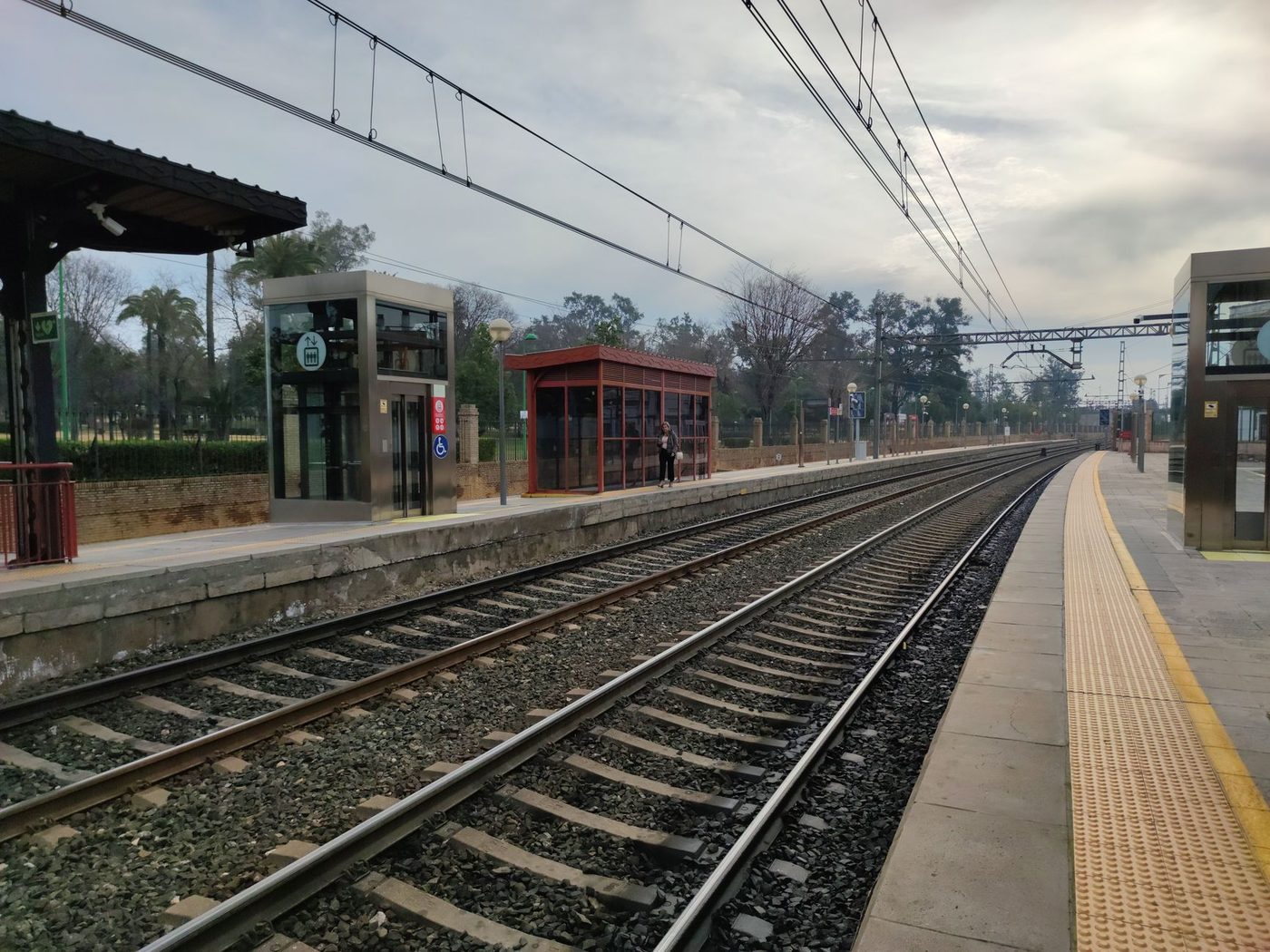
The guide recommends arriving 20 minutes before departure so that staff can contact the destination station, and suggests speaking to a member of staff, or using a help point at an unstaffed station. On the platform it says to apply the brake, keep well behind the yellow line, position the scooter parallel to the track and close to the back wall, and switch off a motorised aid while waiting. For scooter users it says not to exceed 3 miles per hour at any station.
The ramp
The guide says to wait for a member of staff to deploy the ramp and say when to board, and that staff cannot take the controls of powerchairs. For scooters it gives these points:
- Remove any bags or similar before going up the ramp, and note that anti-tip bars are recommended.
- Do not pause on the ramp or look behind, because that can affect the centre of gravity.
- Scooter users are advised to drive themselves on and off the train, using their own discretion on how to enter or leave.
- If a user gets off and asks staff to push the scooter up the ramp, it should be put into free wheel mode.
The general boarding section adds that the user should align with the middle of the ramp and not turn when on it, and that boarding on one’s own means being aware of speed because the space is confined.
Once on board
All the trains have wheelchair spaces in the standard class seating area only, marked on the outside of the carriage, and none in first class. The guide says the spaces are not reservable, though staff will make every reasonable effort to give wheelchair users priority. It says to position the wheelchair or scooter parallel to the side of the train with the brakes applied, and that scooter users are advised to transfer to a seat on board where possible. If no space is free, the guide says to place the scooter to one side of the door vestibule to keep the route through the train clear.
When a rail replacement bus or taxi is needed
The guide says many rail replacement buses and taxis are unable to accept mobility scooters. It says that if possible station teams may be able to store a scooter for later collection, and strongly recommends speaking to staff or the Assisted Travel team about this before travelling.
Booking help
The guide says most passengers travel without booking assistance, and recommends booking two hours before travel. It describes a Priority Seating Card, valid on Gatwick Express, Great Northern, Southern and Thameslink services, which can be applied for through the Customer Relations team.
The bottom line
The January 2025 guide and the Thameslink and Gatwick Express web pages give a limit of 700mm wide, 1200mm long including footplates and 300kg including the user. The guide describes scooters as less manoeuvrable than powerchairs, says folding scooters stored as luggage can travel on any train, sets a 3 miles per hour station speed for scooter users and sets out ramp steps. It also states that scooter policies vary between train operators, so another company’s trains may differ.
Sources
- Wheelchair and mobility scooter guide, January 2025, PDF on thameslinkrailway.com, read 3 November 2026 (thameslinkrailway.com)
- Wheelchairs and mobility scooters, Thameslink, page undated, read 3 November 2026 (thameslinkrailway.com)
- Wheelchairs and mobility scooters, Gatwick Express, page undated, read 3 November 2026 (gatwickexpress.com)